Content by-Sutton Capps
The problem of astigmatism can be tough to understand. It is a refractive error that can be existing from birth or develop during childhood years or after eye injuries or surgery.
The cornea and also lens job to refocus light getting in the eyes right into a solitary centerpiece on the retina. With astigmatism, light gets in the eye in 2 various areas as well as creates blurry or distorted images.
Causes
Astigmatism is a refractive mistake, which means that light getting in the eye doesn't focus precisely on the back of the eye (the retina). The outcome is fuzzy vision.
Typically, the cornea and lens refract light exactly so that light signals are concentrated on the retina to generate clear, crisp images in the brain. But with astigmatism, the cornea or lens aren't completely rounded. Instead, they are extra like a round or a Football with steeper and flatter sides.
Individuals usually have astigmatism their entire lives, yet it's safe. It can be spotted during a detailed eye exam. Your physician will certainly make use of a tool called a keratometer to gauge the curve of your cornea. She or he might likewise perform a visual acuity examination and also ask you to browse various lenses to figure out which ones make your vision the clearest.
In http://burton11luigi.booklikes.com/post/5763879/the-benefits-and-drawbacks-of-selecting-a-lasik-doctor-with-the-latest-modern-technology create astigmatism because of injury or surgical procedure. It can also take place in youngsters as a sign of various other illness, such as squinting or rubbing the eyes.
Medical diagnosis
During a complete eye examination, an eye doctor or eye doctor can discover astigmatism. They utilize unique equipment to gauge your ability to see points plainly at different distances and also focus light properly on the retina.
Typically, light getting in the eye travels through the lens and cornea to assemble at one focal point on the retina. Yet with astigmatism, the form of the cornea or lens is uneven, so light doesn't merge at a single place on the retina, producing blurred as well as altered vision.
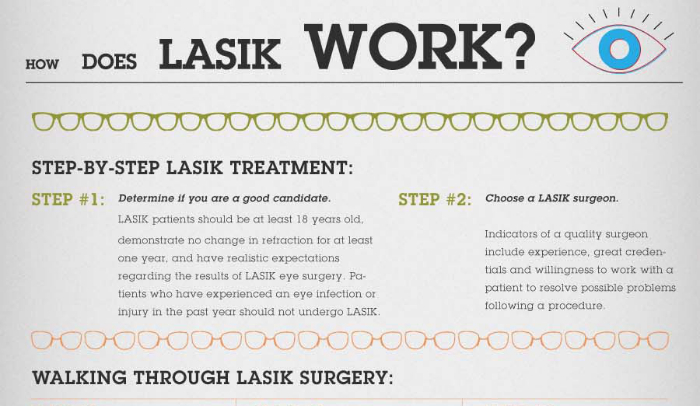
One of the most usual approaches for spotting astigmatism are the visual acuity examination as well as refraction examinations. Your medical professional might also make use of a tool called a keratometer to obtain a measurement of the cornea's shape, or utilize a Jackson cross cyndrical tube to subjectively fine-tune those dimensions. Your doctor can also reshape the cornea with laser eye surgical treatment, like LASIK or photorefractive keratectomy (PRK). These treatments are quick as well as painless. They are offered for both farsightedness and nearsightedness, along with astigmatism.
Therapy
A person with astigmatism has an irregular curve in the front surface area of the eye. This impacts how light rays focus on the retina, generating fuzzy vision. Eyeglasses and also contact lenses correct this by placing a lens with the best prescription before the eyes.
Your eye doctor can detect astigmatism throughout an extensive eye exam. They might make use of a phoropter (a tool with dials to examine refractive error) and a Snellen Chart to analyze your visual acuity. They can also use an autorefractor to beam light into your eye and also assess exactly how the return image concentrates on your retina.
Typically, the cornea as well as lens are spherical, meaning they have matching curves. Yet astigmatism takes place when the cornea or lens have unequal contours. This impacts just how light concentrates on the retina, leading to blurred range and also near vision. You might be born with astigmatism, develop it after an injury or surgery, or get it from an eye disease or cataract.
Prevention
If you're prone to astigmatism, it can aid to see your eye treatment specialist often. Your physician can detect astigmatism making use of a series of examinations, consisting of a visual acuity test and a refractive examination with a phoropter or other device.
Will Lasik Fix Astigmatism of your cornea and also the lens in your eye establish exactly how well you see. In astigmatism, the cornea or lens is misshapen, suggesting that when light enters the eye it falls short to assemble appropriately on the retina. This leads to blurred vision. Your physician can correct this with get in touch with lenses, glasses or surgery (LASIK). Sometimes, the problem can be inherited from your moms and dads. Other times it might be an adverse effects of an eye injury or disease. Periodically, it can also be a signs and symptom of the eye condition keratoconus, which creates your cornea to end up being thinner as well as a lot more cone-shaped. Astigmatism can not be protected against, nonetheless. It's usually present from birth.